Selecting a transportation logistics partner is one of the more consequential decisions an organization makes. The right provider keeps supply chains moving, reduces operational overhead, and protects cargo in transit, while the wrong one introduces delays, compliance gaps, and cost overruns that ripple through the rest of the business.
Why Choosing the Right Logistics Partner Matters
India's logistics sector has grown alongside e-commerce, manufacturing, pharma, and infrastructure, bringing in everything from small transporters to large multimodal companies. With so many providers to choose from, businesses need a clear way to evaluate them before committing to a long-term partnership.
Documenting your requirements in advance — cargo type, shipment volume, geographic coverage, and any special handling needs — lets you compare providers on equal terms and avoid settling for generic service packages that don't match your actual operations.
Steps to Choosing a Reliable Transportation Logistics Company
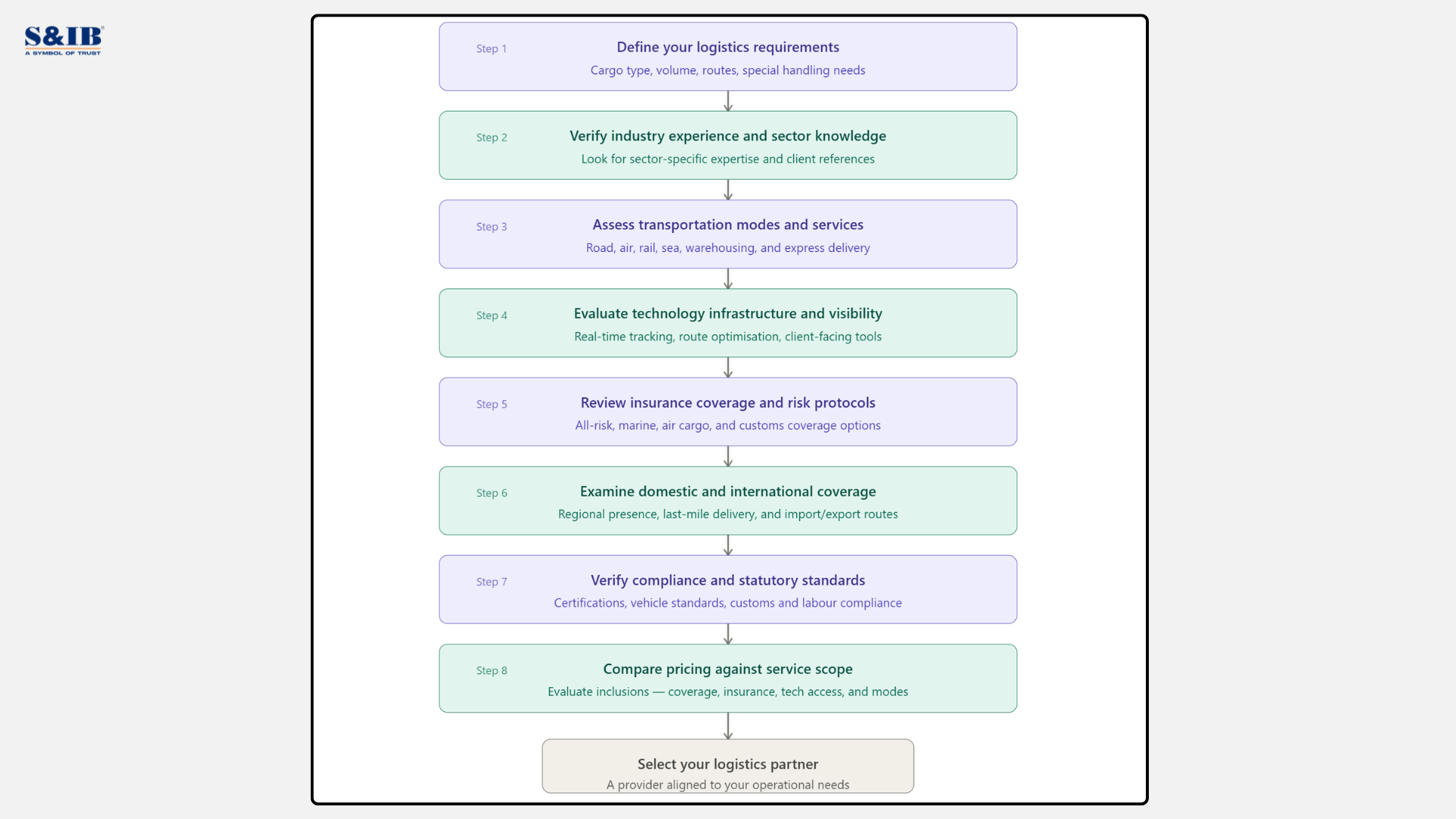
1. Define your logistics requirements before approaching vendors
Know your cargo type, shipment frequency and volume, coverage area, and any special handling needs such as temperature control or hazardous material compliance before requesting proposals.
2. Verify industry experience and sector knowledge
A provider that excels at consumer goods may lack the protocols needed for pharma cold chain or industrial equipment. Ask how long they've operated, which industries they primarily serve, and for references from businesses like yours.
3. Assess the range of transportation modes and services available
A capable partner should offer road, air, rail, sea, and intermodal transport under one framework, plus warehousing, customs supervision, express delivery, and specialized handling for sensitive cargo.
4. Evaluate technology infrastructure and shipment visibility
Look for real-time tracking, route optimization, inventory supervision, and client-facing visibility tools so you can monitor cargo status without repeatedly contacting the provider.
5. Review insurance coverage and risk management protocols
A reliable company should offer all-risk, marine, air cargo, and customs insurance, along with clear protocols for handling route disruptions, hazardous material incidents, and delivery failures.
6. Examine domestic and international coverage
Confirm the provider has established routes, regional presence, and reliable last-mile delivery across your required coverage area, plus international freight partnerships if you import or export.
7. Verify compliance and statutory standards
Request documentation of certifications covering vehicle standards, driver licensing, hazardous materials handling, customs procedures, and labour compliance to avoid liability exposure.
8. Compare pricing structures against service scope
Evaluate cost in the context of what's actually included — transportation modes, coverage, warehousing, insurance, and technology access — rather than choosing the lowest quote in isolation.
Why Companies Choose S&IB Services as a Logistics Partner Pan India
S&IB Services has operated in logistics and transportation for over 35 years, serving manufacturing, retail, banking, pharmaceutical, and infrastructure clients across 6,500 locations with 35,000 trained personnel and 756 satisfied customers.
The company delivers road, air, rail, sea, and intermodal transport, along with warehousing, express delivery, customs supervision, and specialized cargo handling under one integrated framework — managing pickup through delivery, including inventory handling and real-time tracking with full shipment visibility.
Domestic door-to-door delivery typically takes one to seven days depending on distance and mode, with air and sea freight available for international shipments, backed by customs supervision support. Cargo insurance options include all-risk, marine, air cargo, and customs coverage, with customized plans for high-value or specialized materials.



 Help Desk